
The Tullio Cianetti Hall/KdF Hall
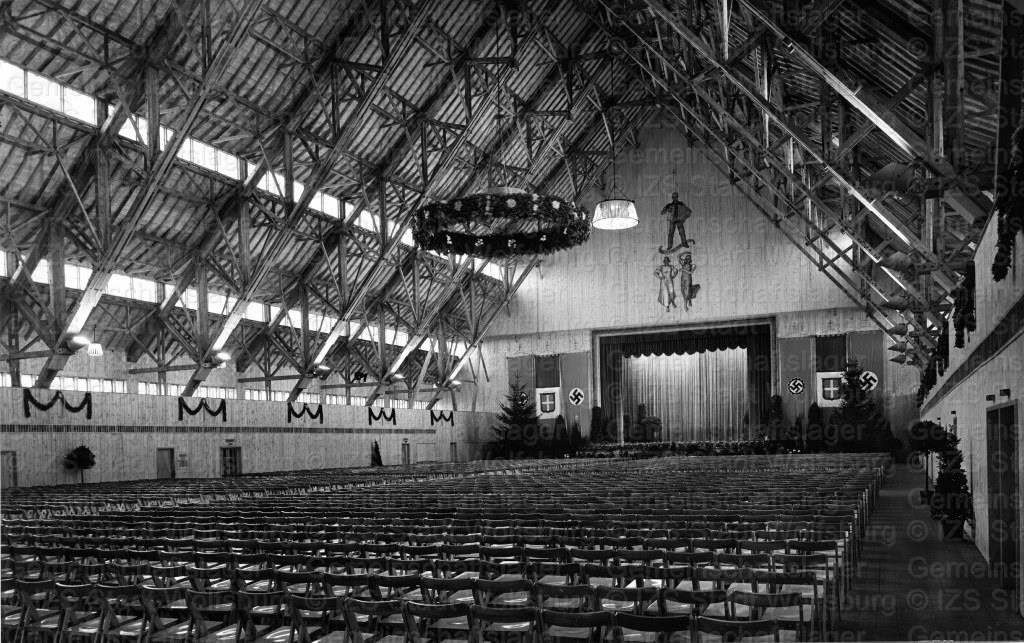
The Tullio Cianetti Hall served as the social and cultural center of the “City of the KdF Car near Fallersleben.” Hailed as the “Cathedral of the People’s Community,” the building—erected in a central location within the communal camp and capable of accommodating some 5,000 visitors—dominated the surrounding urban area simply by virtue of its sheer size.[1]
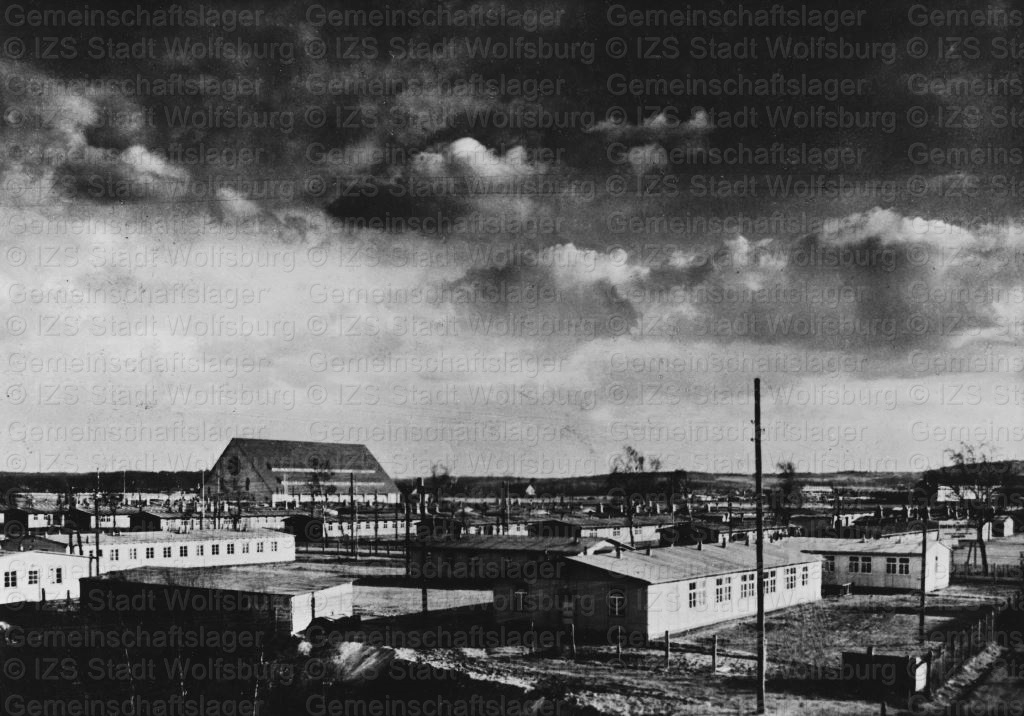
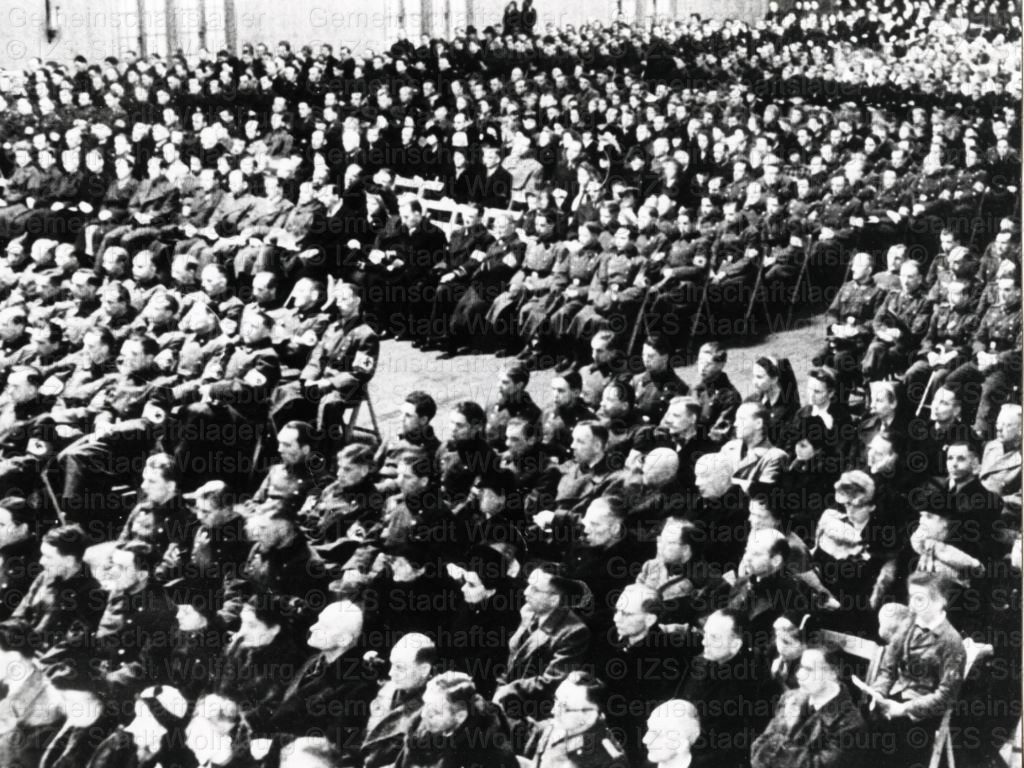
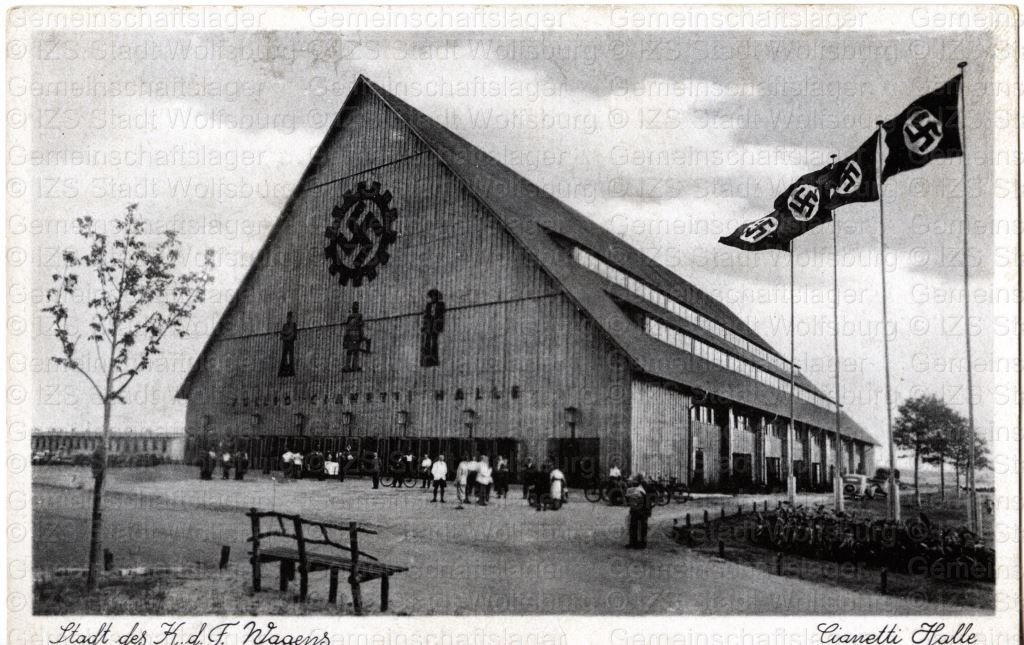
It followed the architectural principles of the KdF Halls, which had been designed by the construction department of the German Labor Front (DAF) under its director Julius Schulte-Frohlinde (1894–1968) for the 1936 Olympic Games in Berlin. It was a self-supporting wooden structure with a ridge height of 29 meters, a span of 64 meters, and a length of 120 meters. The gable was adorned with the DAF symbol, a swastika surrounded by a gear wheel. Below it were three wooden figures assembled in a mosaic-like pattern, symbolizing the construction period: a laborer laying the foundation, a mason erecting the foundation walls, and a carpenter building the hall.[2]
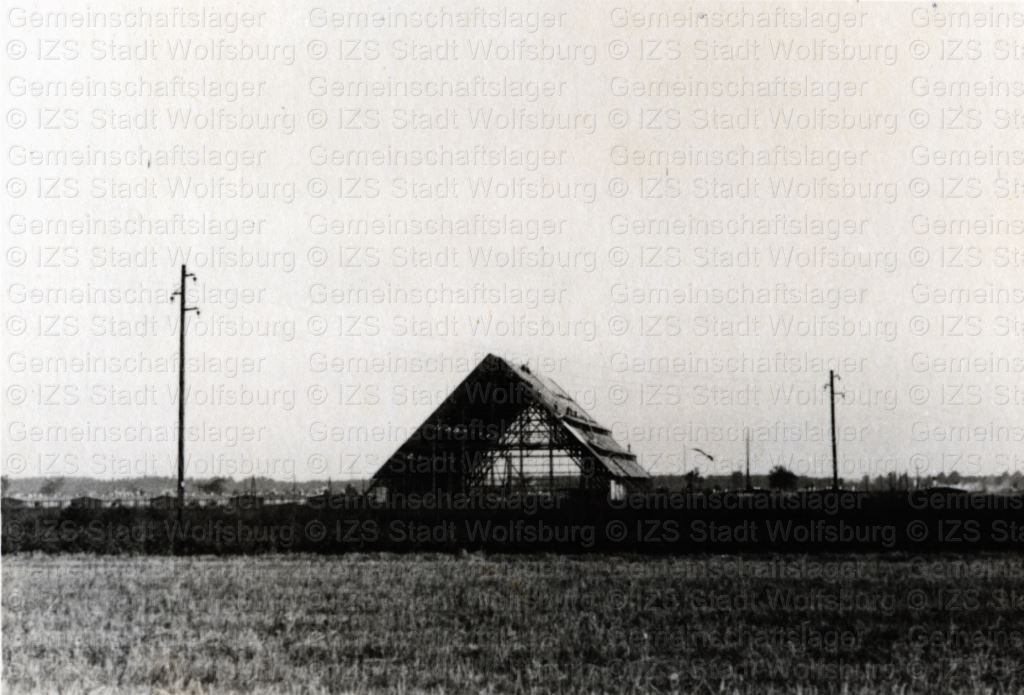
On June 27, 1938, work began on laying the wooden foundations for the building, which was still known as the "Hall of 5,000" at the time. Just a quarter of a year later, on September 30, 1938, the hall was used for the first time for a concert by the Wesendorf Aviation Music Corps.
However, it was not officially inaugurated until October 15, 1938 in the presence of Robert Ley, the leader of the German Labour Front, and Tullio Cianetti, the chairman of the fascist industrial workers' association Confederazione fascista dei lavoratori dell'industria .
Both organizations had agreed to the deployment of Italian laborers in the area of the “City of the KdF Car.” Ley therefore named the building the Tullio Cianetti Hall.[3] After the fall of the Italian dictator Benito Mussolini (1883–1945) and the subsequent declaration of war by the new government under Marshal Pietro Badoglio against the German Reich, the situation for Italians in Germany deteriorated significantly. From then on, the assembly hall was referred to simply as the “KdF Hall.” On May 7, 1945, it was completely destroyed by fire.
[2] “The Community Hall Filled Up for the First Time,” in: Aller-Zeitung, October 5, 1938. On the architecture of the “Cianetti Hall,” see Helmut Weihsmann, Building Under the Swastika: Architecture of the Downfall. Vienna 1998, p. 177.
[3] “Cianetti Hall Inaugurated by Dr. Ley. A Great Day for Our Homeland,” in: Aller-Zeitung, October 17, 1938.