
Fire protection and bombing
The volunteer fire department in the "town of the KdF car near Fallersleben"
The importance of the volunteer fire departments—particularly during World War II—in the context of fire and air raid protection can hardly be overstated. In the newly founded “City of the KdF Car,” Mayor Werner Steinecke therefore sought to establish a volunteer fire department as early as December 1939. To this end, the Aller-Zeitung published an appeal from the mayor on December 2. The “ongoing development of the city” as well as “[v], above all, air raid protection and the increased dangers resulting from the current state of war,” the mayor explained, made it urgent to “strengthen fire protection.”[1] Until then, fire protection for the factory and the town had been in the hands of the Volkswagen factory fire department and the fire department of the Count von der Schulenburg estate. These fire departments would continue to “provide firefighting assistance to the extent possible,” Steinecke explained, “[s]but they now need to be supplemented by a municipal fire department.” He therefore called on all “able-bodied fellow citizens” between the ages of 17 and 55, “who unreservedly stand up for the National Socialist state at all times,” to join the volunteer fire department.
However, only 21 citizens responded to the call, which is why Steinecke made another attempt in May 1940. Later that same month, on May 29, 1940, the Volunteer Fire Department of the “City of the KdF Car” was founded at the Schulz Inn. Under the leadership of Dipl.-Ing. Schumann, a total of 39 firefighters eventually came together.[2]
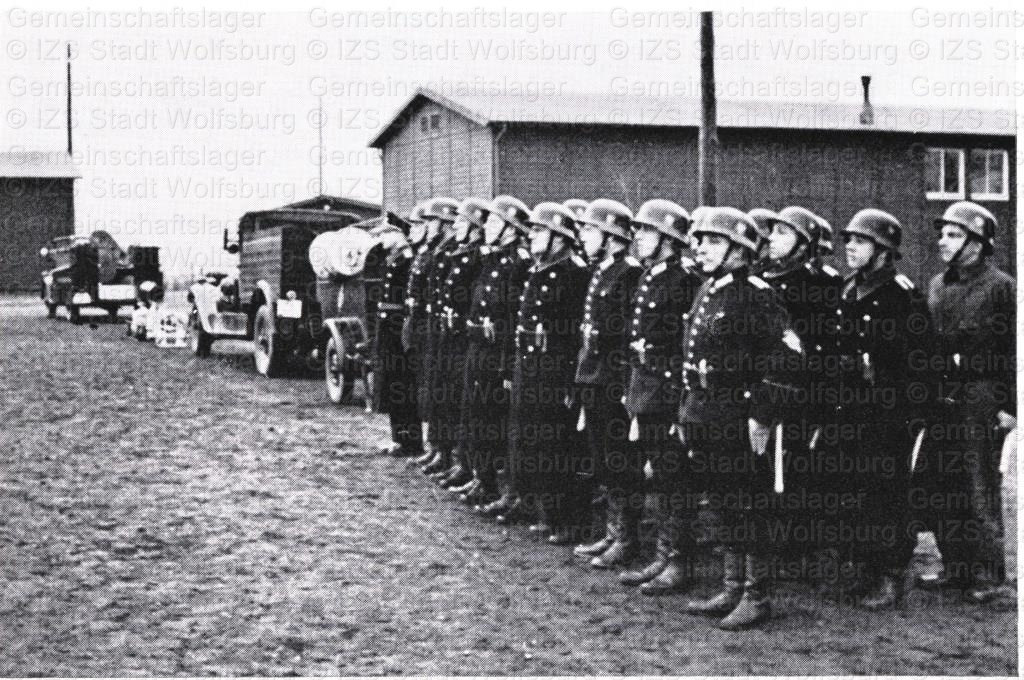
However, it took some time before the fire department was able to take over fire protection for the city. First, the fire department had to be equipped with the appropriate protective gear and equipment. It was not until April 1, 1941, that it took over fire protection in the “City of the KdF Car” and was thus responsible for approximately 3,000 apartments. However, it was not responsible for the Volkswagen plant or the communal housing complex managed by the Volkswagen plant’s social services: these areas continued to be served by the plant’s fire department. Around the same time, construction began on the main fire station on Fallerslebener Straße, in the immediate vicinity of the municipal utilities. Initially, it was housed in a temporary building that contained not only the fire alarm control center, day rooms, and sleeping quarters but also a storage room, a training room, and several garages for housing vehicles and other equipment. Particularly striking, however, was the 18-meter-high fire tower.[3]
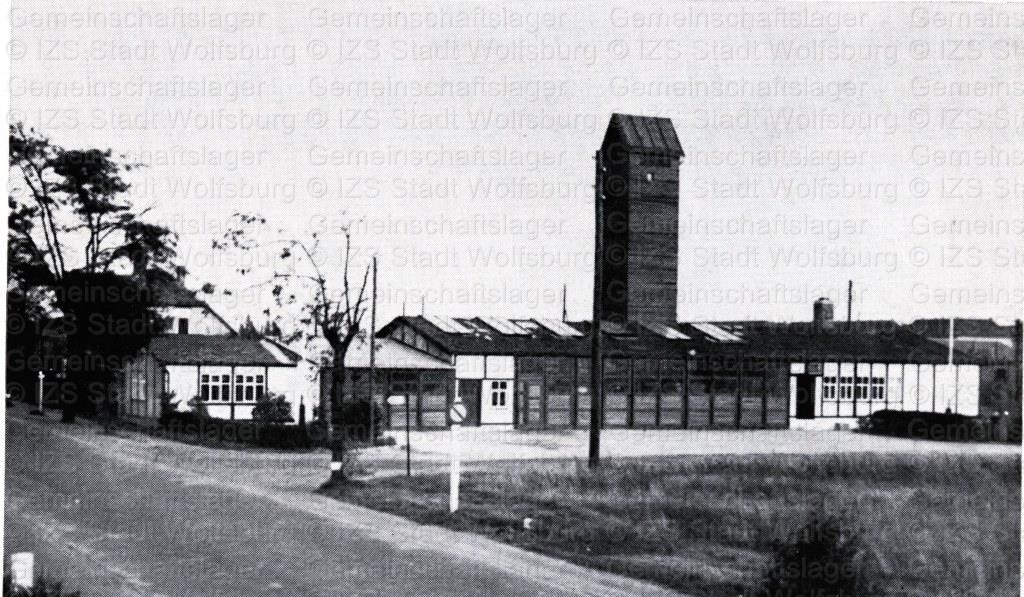
At that time, the fire department was organized into two firefighting teams, which together formed a fire company. The department’s fleet consisted of an Opel Blitz crew truck and a converted Horch passenger car crew truck.[4] At the end of June 1941, the fire department moved into its new quarters on Fallerslebener Straße.
As the war progressed, the scope of the volunteer fire department’s duties continued to expand. It was even deployed to fight major fires in the Hanover and Braunschweig areas. However, its membership had declined due to conscription into military service. On November 9, 1942, the Hitler Youth fire brigade—which had been trained by the Volunteer Fire Department—was therefore conscripted into service. According to the *Aller-Zeitung*, the fire department in the “City of the KdF Car” is said to have had over 62 “firefighting forces” in early December 1942.[5] The official party daily newspaper *Die Neue Zeit* even saw the realization of the National Socialist ideal of a “people’s community” in the composition of these forces: “In the municipal fire department, the skilled worker stands alongside the ordinary volunteer, the master builder alongside the foreman and office clerk, and the building superintendent alongside the city inspector.”[6] Given the difficult early days of the volunteer fire department and the increasing staffing problems resulting from the course of the war since 1943, this description of the situation hardly corresponded to reality—and was never achieved until the German Reich’s surrender on May 8, 1945.
[1] “Become Fighters Against the Danger of Fire—The Mayor Calls for Enrollment in the Volunteer Fire Department,” in: Aller-Zeitung, December 2, 1939.
[2] StadtA WOB, Collection of Printed Materials, Commemorative Publication Marking the 25th Anniversary of the Wolfsburg Fire Department on May 29, 1965, p. 2 (unpaginated). See also “Volunteer Fire Department Formed,” in: Aller-Zeitung, June 2, 1940.
[3] “The City’s Main Fire Station Under Construction,” in: Aller-Zeitung, April 3, 1941.
[4] WOB City Archives, HA 325, Annual Report on Tasks Completed and Notable Events in the Air and Fire Protection Department for the Period from December 1, 1940, to April 1, 1941, dated April 3, 1941.
[5] “City Fire Protection Ensured by the Volunteer Fire Department,” in: Aller-Zeitung, December 5–6, 1942.
[6] “Swearing-in of the Volunteer Fire Department,” in: Die Neue Zeit, February 4, 1942.