Community camp
The so-called craftsmen's quarter of the city of Wolfsburg has been a redevelopment area since 2009. In the course of the urban planning process, the history of the area was critically reviewed, since the neighborhood is located on the site of the former communal camp of the Volkswagen factory in the "City of the KdF Car near Fallersleben.
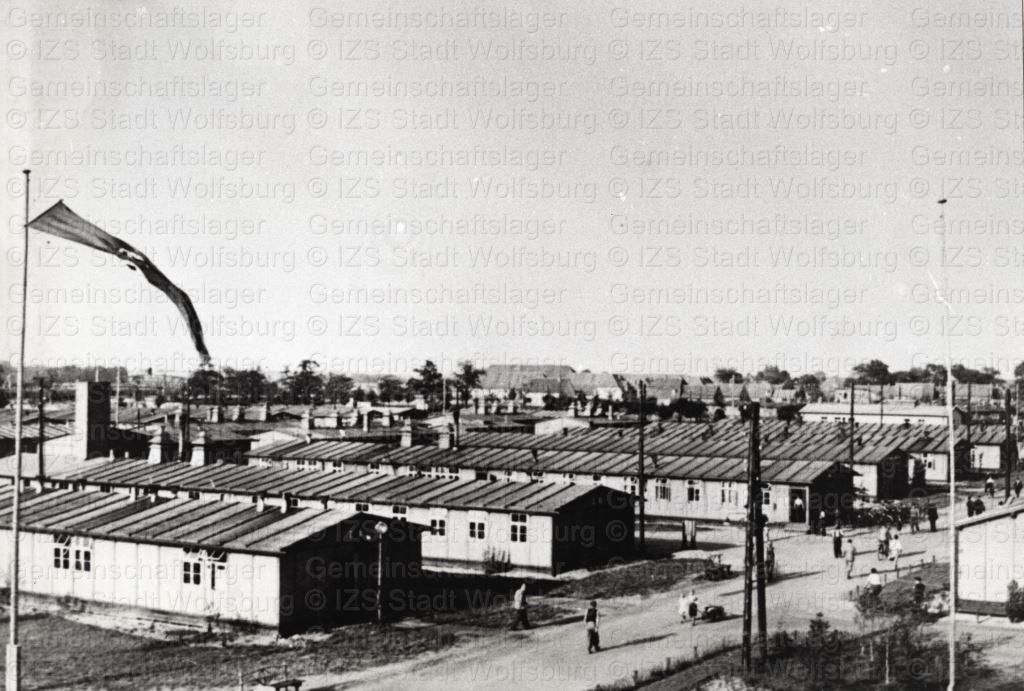
From the start of the city’s reconstruction in 1938 until the end of the war in May 1945, the communal camp housed important municipal and social institutions. For example, it was home to both the mayor’s office and other municipal administrative facilities. The Tullio Cianetti Hall, towering over the city with its immense size, served as the cultural hub of urban life. The camp also housed the post office, the volunteer fire department, the employment office, and several banks, as well as numerous organizations of the NSDAP. The communal camp thus formed the actual center of the “City of the KdF Car.”
Initially, it served to house the German workers employed in the construction of the Volkswagen plant and the city. As early as September 1938, however, approximately 2,400 Italian workers recruited through the German Labor Front also moved into the barracks. The integration of the plant into the “Third Reich’s” armaments production following the outbreak of war led to a system of forced labor within the factory. Consequently, beginning in 1940, numerous forced laborers from nearly every part of Europe arrived in the “City of the KdF Car.” Many of them were housed in the communal camp, which thus evolved over the course of the war into a “typical mass quarters for foreign forced laborers in the arms industry.”[1]
The texts on the communal camp were compiled by Marcel Glaser as part of the renovation of the Handwerkerviertel in 2017–18.
[1] Klaus Jörg Siegfried, The Life of Forced Laborers at the Volkswagen Plant, 1939–1945. Frankfurt am Main, 1988, p. 91.
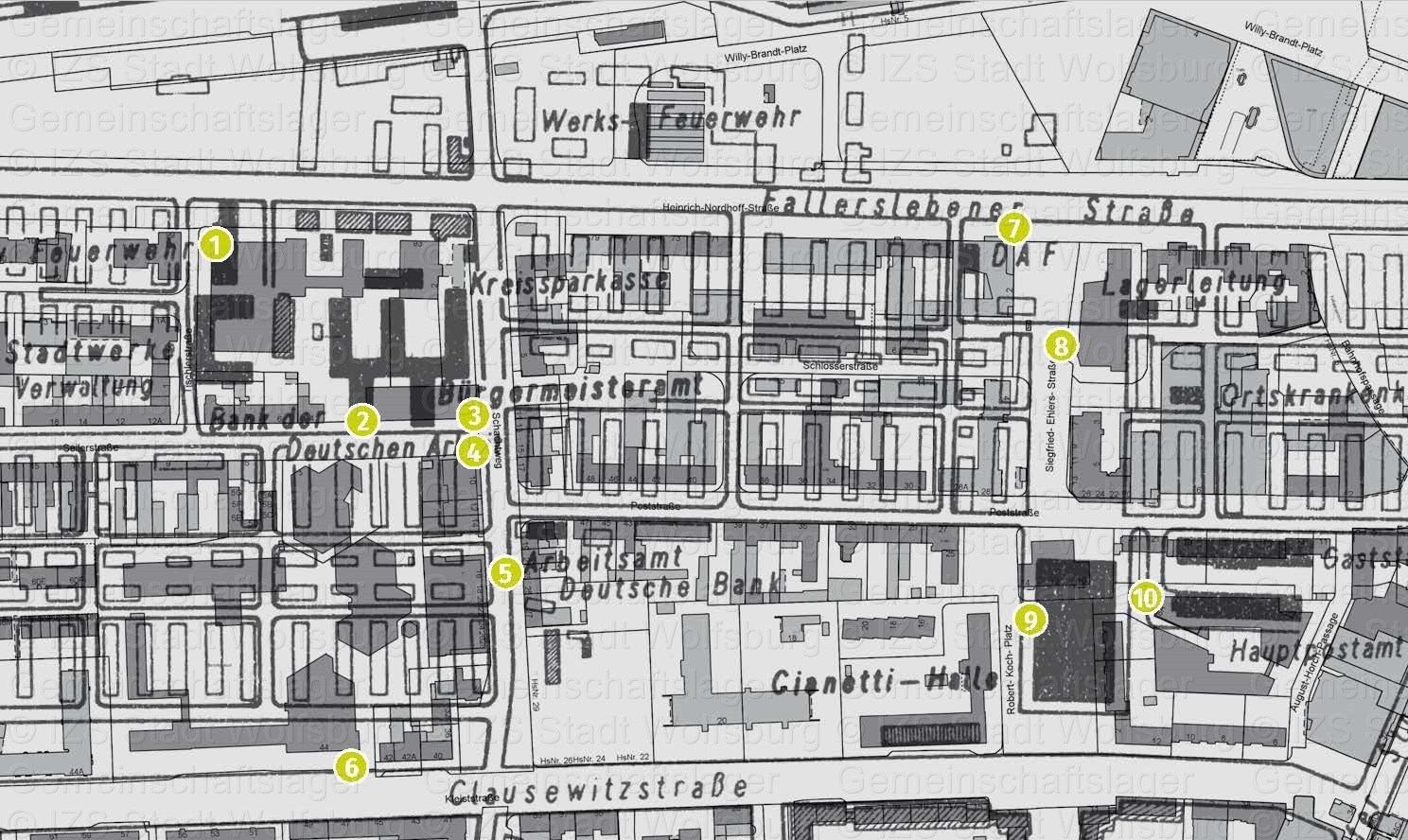
- (1) Volunteer fire department
- (2) Bank of German Labor
- (3) Mayor's office and city administration
- (4) Alien child care home
- (5) Labor office
- (6) Prisoner of war/convict camps
- (7) German Labor Front Barracks
- (8) Barrack of the camp management
- (9) Tullio Cianetti Hall
- (10) Post office
- (11) Children's home Schachtweg
By using this function, you agree that the data may also be transferred to third countries, outside the European Economic Area, without an adequate level of data protection (especially USA). It is possible that authorities may access the data without any legal remedy. You can revoke your consent at any time. Further information: Privacy policy